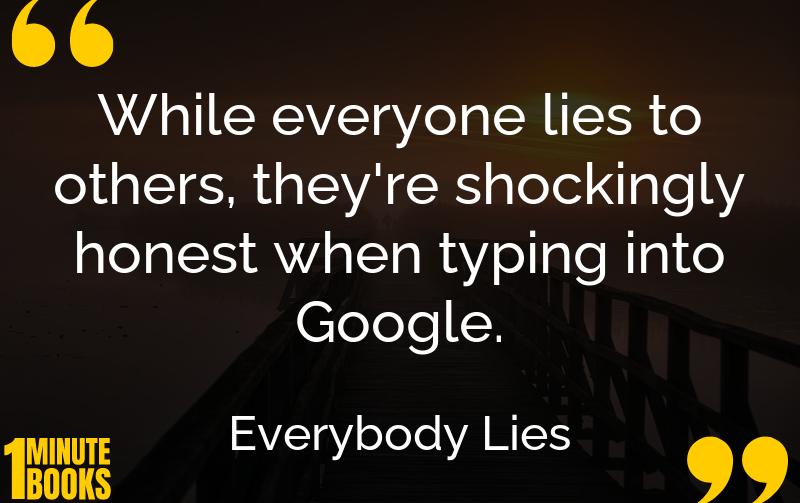
The book explores how Big Data, especially internet queries, reveals true human behavior and thoughts. It challenges public assumptions and underscores Big Data’s power and risks.
Main Lessons
- People are more honest online than in face-to-face interactions.
- Big Data can reveal hidden truths about societal behaviors.
- Public perceptions can be deceptive compared to online data insights.
- The 2016 U.S. presidential election highlighted Big Data’s predictive power.
- Traditional assumptions, such as NBA players’ backgrounds, may not hold up against data.
- Big Data allows rapid and flexible experiments without extensive funding.
- Data-driven insights can improve or manipulate societal behaviors.
- Analyzing search patterns provides psychological and cultural insights.
- Big Data has ethical concerns, particularly around privacy and manipulation.
- Corporations wield significant control over Big Data for advantages.
- False assumptions and confusion in data interpretation can lead to errors.
- Big Data necessitates vigilance over its use and potential abuses.
- Understanding data science requires a balance of intuition and evidence.
- The power of Big Data matches with its limitations and ethical challenges.
- Future implications of Big Data include geopolitical advantages and ethical dilemmas.