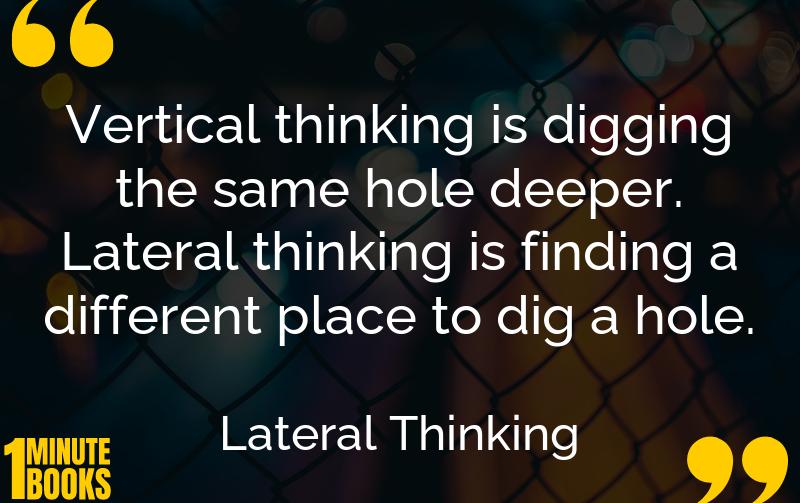
Lateral Thinking by Edward de Bono introduces techniques for solving problems creatively, challenging traditional linear thinking, and generating innovative ideas by approaching challenges from unconventional angles.
Main Lessons
- Lateral thinking encourages problem-solving from new perspectives.
- Creative ideas often arise from unconventional thinking methods.
- Provocation involves challenging existing assumptions.
- Random entry uses unrelated stimuli to spark new solutions.
- Questioning norms can reveal hidden biases and enhance creativity.
- Alternative scenarios help envision and generate diverse ideas.
- Using analogies aids in transferring solutions across contexts.
- Lateral thinking is applicable in business, education, and personal development.
- Real-life examples demonstrate successful uses of lateral thinking.
- Lateral thinking requires effort, practice, and a willingness to change.
- Critiques include difficulties in assessing new ideas’ value.
- De Bono acknowledges resistance to change as a common challenge.
- A mindset shift is key for embracing creativity and innovation.
- Lateral thinking remains influential in psychology and creativity.
- The book inspires breaking conventional problem-solving patterns.