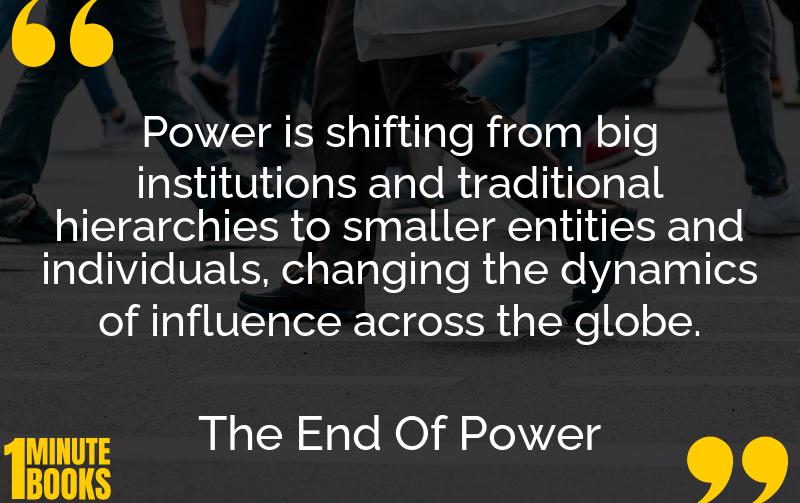
The End of Power explores how traditional power structures are declining, leading to both opportunities and challenges. Moisés Naím discusses how power’s fragmentation influences politics, society, and economy, altering global dynamics.
Main Lessons
- Power is losing its grip due to democratization and technological advancements.
- Smaller entities and individuals are gaining influence over traditional structures.
- The decentralization of power fosters innovation and creativity.
- Democratized power can pose challenges in maintaining global stability.
- The rise of micropowers can challenge mega powers in asymmetrical conflicts.
- Mobility and access to information empower individuals and nations.
- Political and economic landscapes are reshaped by new power dynamics.
- The influence of non-state actors is growing in global affairs.
- Traditional organizations face competition from agile and innovative competitors.
- Public trust in institutions is waning, demanding increased transparency.
- Grassroots movements can drive significant social and political change.
- The global economy is influenced by the rapid spread of ideas and technologies.
- Rethinking institutions’ roles and strengthening leadership is crucial.
- The erosion of power structures presents both risks and possibilities.