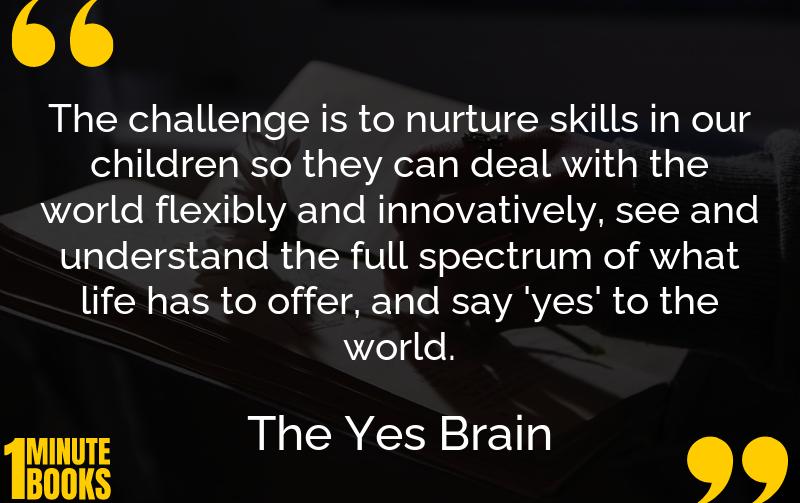
The Yes Brain delves into the significance of fostering courage, curiosity, and resilience in children, emphasizing the power of ‘Yes Brain’ states over ‘No Brain’ states. It offers strategies for parents to cultivate emotional intelligence.
Main Lessons
- Brains are adaptable; fostering a Yes Brain can change behavior and structure.
- The Yes Brain is characterized by openness and flexibility, in contrast to a reactive No Brain.
- Parents must model Yes Brain traits such as empathy to guide their children effectively.
- Emotional understanding and regulation can be taught using techniques like deep breathing.
- Explaining emotions through zones helps children identify and manage their feelings better.
- Creating a balance between structure and freedom encourages children’s growth.
- Insight involves stepping back and recognizing emotions without judgment.
- Encourage children to handle adversity through relaxation and calm-down techniques.
- Empathy can be developed by modeling behavior and effective communication.
- Supporting risk-taking builds resilience, preparing children for life’s uncertainties.
- Children should understand they have choices in responding to situations.
- Parents are encouraged to acknowledge and empathize with their child’s emotions.
- Understanding interpersonal neurobiology aids in promoting emotional integration.
- Guide children in dealing with stress by teaching them emotional coping strategies.
- Creating compassionate environments nurtures adaptive and emotionally intelligent children.