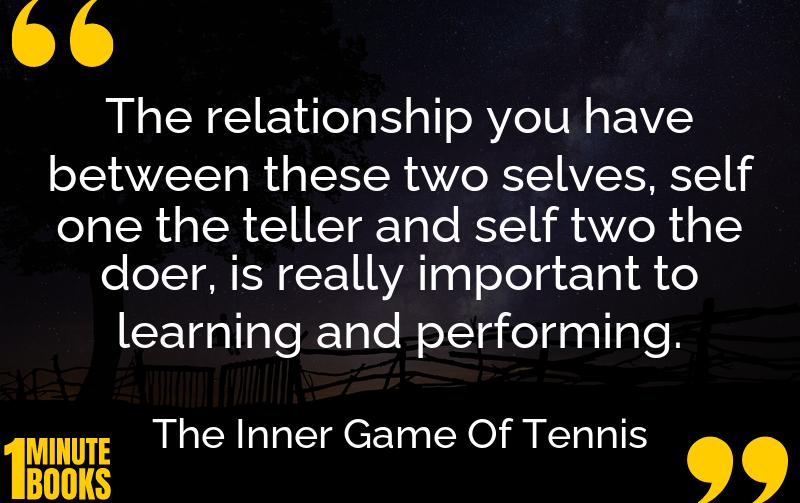
Timothy Gallwey’s ‘The Inner Game of Tennis’ explores achieving peak performance by adopting a judgment-free, childlike mindset, emphasizing trust, concentration, imagery, and a non-judgmental attitude.
Main Lessons
- Judgment-free learning enhances natural skill acquisition, as seen in children’s innate abilities.
- Achieving peak performance often involves unlearning bad habits that interfere with natural processes.
- Self one, the ego, is typically the controller, but peak performance requires balancing it with self two, the doer.
- Concentration is key: focus on the present moment to quiet the mind and improve outcomes.
- Imagery rather than verbal commands can better guide physical actions.
- Trusting yourself allows innate abilities to flourish without ego interference.
- The ‘bounce-hit’ exercise helps synchronize actions with natural physical movements.
- Avoid letting the mind wander, as staying in the moment reduces anxiety.
- Positive thinking, though seemingly beneficial, can activate judgment and disrupt performance.
- The umpire’s role is to note facts without judgment, a mindset beneficial for personal performance analysis.
- Effortlessness, often felt during peak performance, occurs when the ego steps aside.
- Being aware of body sensations, like the tongue exercise, heightens focus and awareness.
- Strive for natural effort, using only the muscles necessary for the task.
- Self one prefers to take credit, but real learning comes from letting go of control.