Ray Kurzweil’s ‘How to Create a Mind’ explores the intricacies of the human brain, focusing on pattern recognition and memory storage, and examines how these principles can guide advancements in artificial intelligence.
Main Lessons
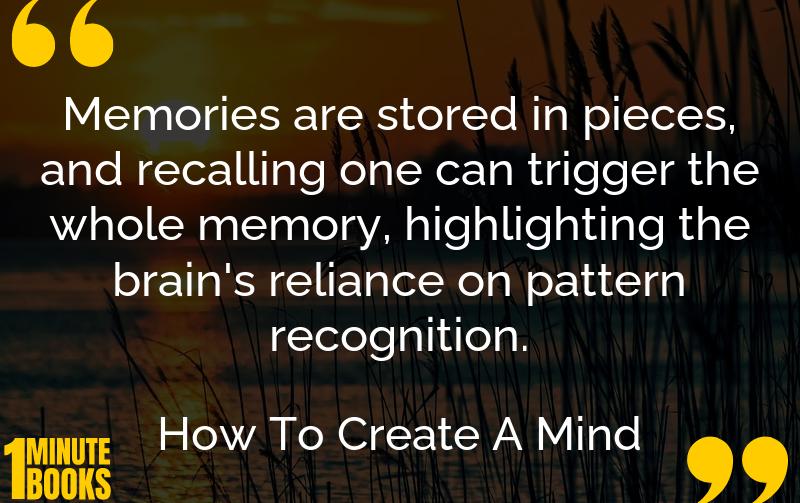
- The brain stores memories in fragments accessible through triggers.
- Pattern recognition is crucial for memory retrieval and learning.
- The neocortex, unique to mammals, manages higher brain functions like perception and cognition.
- Memory and emotions are processed through complex neuronal networks.
- Artificial intelligence can mimic brain functions through hierarchical models.
- AI advancements involve mimicking the brain’s structure for learning capabilities.
- Watson illustrates how AI can process complex natural language queries.
- Technological growth is exponential; future AI advancements could exceed current sci-fi depictions.
- Understanding the brain better could lead to developing sentient computers.
- Moore’s Law predicts rapid computer advancements, crucial for AI evolution.
- Society will heavily rely on AI in the coming decades.
- Future computers might achieve human-like pattern recognition and learning.