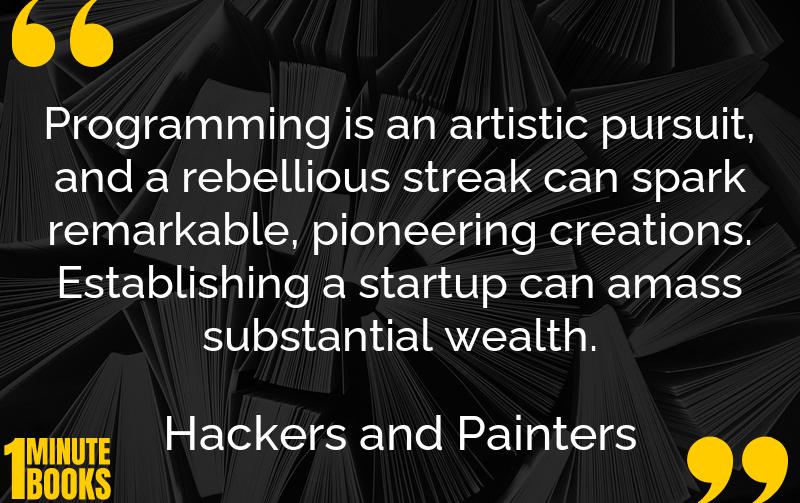
Hackers and Painters by Paul Graham explores the intersection of computer programming and creative artistry. It argues that programming is an art, blending creativity and technology in a way akin to painting.
Main Lessons
- Programming is analogous to art, requiring creativity and innovative thought.
- Hackers, like artists, often value non-conformity, which fosters innovation.
- Programming languages are diverse, evolving to meet specific needs and personal preferences.
- The rebellious spirit in programmers enhances their ability to innovate and challenge established norms.
- Launching a startup is a viable path to wealth, leveraging the creative potential in programming.
- End users’ approval is crucial; feedback helps refine products to meet their needs.
- Less popular programming languages can offer businesses a competitive edge by optimizing performance.
- Spammers could be better tackled with tailored approaches in filtering technology.
- Programming language popularity is driven by compatibility and ease of hiring skilled programmers.
- Hackers contribute to the evolution of programming languages, refining them for better performance.
- Societal norms can sideline ‘nerds,’ but this is often a byproduct of their focus on innovation.
- Fashion and morality change over time; so does the perception of hackers and programming.
- The drive for intellectual challenge among programmers can sometimes blur legal boundaries.
- Wealth is distinct from money; successful entrepreneurs create wealth by building valued assets.
- In the tech landscape, new languages develop as programmers tailor them to evolving demands.