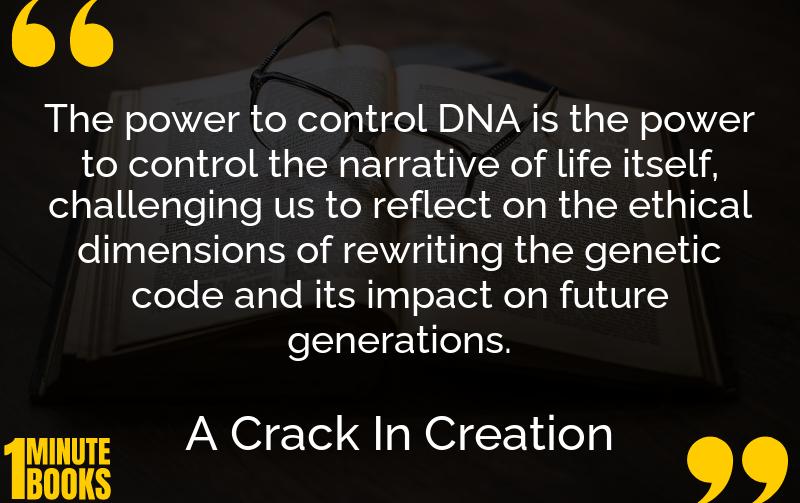
A Crack in Creation” explores CRISPR’s potential to revolutionize genetics, highlighting the balance between groundbreaking medical advances and the ethical challenges of genetic manipulations.
Main Lessons
- CRISPR’s potential to fundamentally alter genetic codes offers hope in treating diseases like cancer.
- The discovery highlights ethical responsibilities and the necessity for thoughtful usage and regulation.
- Jennifer Doudna underscores the importance of cautious application to avoid unforeseen repercussions.
- While technically feasible, reproductive genome editing poses ethical and generational risks.
- Doudna compares CRISPR to nuclear technology, emphasizing its dual-edged nature.
- The book stresses interdisciplinary collaboration and transparency in scientific research.
- It encourages ongoing dialogue between scientists, the public, and policymakers for safe innovation.
- The narrative celebrates CRISPR’s discovery while serving as an educational tool on its impacts.
- Doudna calls for careful ethical deliberation before manipulating the human genetic code.
- The societal implications of genetic editing are immense, demanding a well-informed public discourse.
- CRISPR’s versatility extends beyond healthcare to agriculture, underlining its broad opportunities.
- The book offers a reflection on scientific progress and its governance by ethical principles.
- Collaboration and sharing knowledge among scientists are pivotal in responsibly advancing CRISPR.