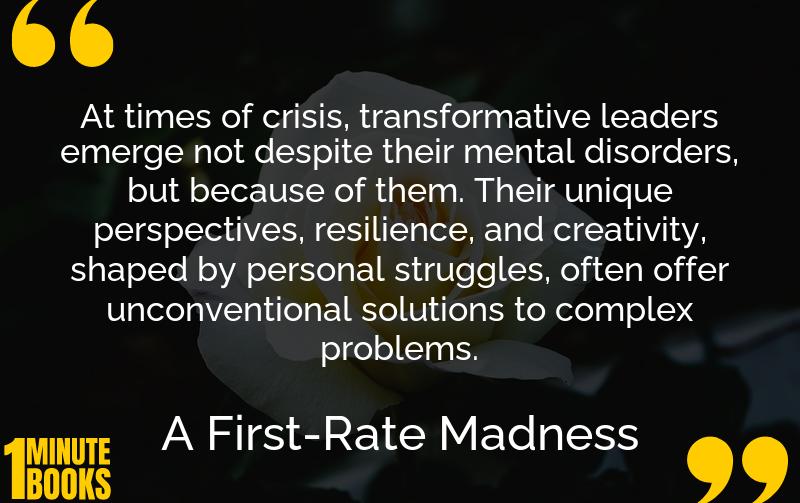
In ‘A First-Rate Madness’, S. Nassir Ghaemi explores how mental illness can shape effective leadership, featuring figures like Gandhi and Churchill.
Main Lessons
- Mental illnesses like depression can enhance empathy, providing leaders with a profound understanding of others.
- Bipolar disorder may lead to non-standard thinking and innovative problem-solving in leadership scenarios.
- Historical leaders like Gandhi and King demonstrated how their struggles with depression bolstered their empathy and nonviolent ideologies.
- Churchill’s likely bipolar disorder might have contributed to his astute perception during World War II.
- JFK’s hyperthymic traits possibly aided his diplomatic decisions during the Cuban Missile Crisis.
- Contrary to societal stigma, mental illness can enhance creative and empathetic traits necessary for crisis leadership.
- Healthy leaders like Bush and Blair, lacking such mental experiences, might miss unique perspectives leading to different outcomes.
- Historical figures like Lincoln had mental health issues that contributed to their unique problem-solving approaches.
- Stigmatization of mental illness prevents recognition of its potential positive contributions to leadership.
- Mental health presence in leaders can shape innovative strategies and resilient mindsets during turbulent times.
- Redefining views on mental illness in leadership can lead to a more inclusive and supportive society.
- Mental illness is not a straightforward disability but often provides distinct advantages.