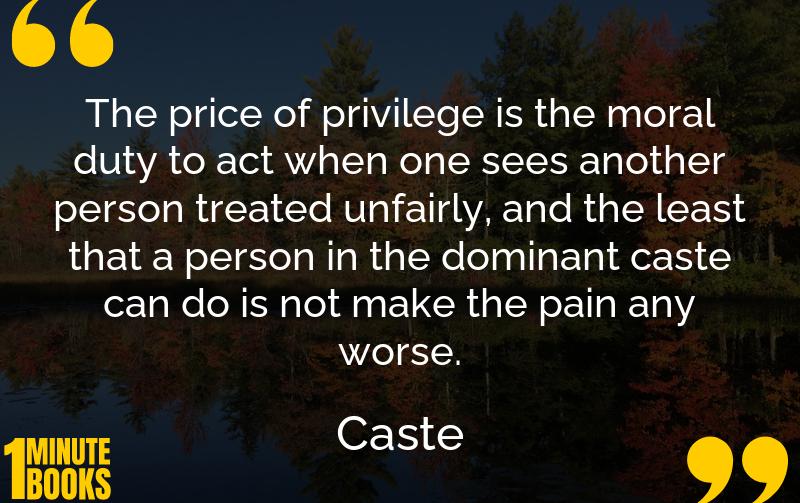
Caste by Isabel Wilkerson reveals the hidden societal rules cementing class distinctions and offers insights on dismantling these systems for true equality.
Main Lessons
- The caste system is supported by eight foundational pillars: Divine will, heritability, endogamy, purity, hierarchy, dehumanization, terror, and superiority.
- Religious beliefs often serve as a justification for caste systems, reinforcing social structures.
- Caste assignments are inherited, locking generations into predetermined roles.
- Endogamy enforces marrying within one’s caste, further entrenching social divisions.
- Purity beliefs maintain boundaries between castes, often leading to discrimination.
- Occupational hierarchies assign low-status jobs to certain castes, perpetuating inequality.
- Dehumanization allows higher castes to stigmatize and oppress lower castes.
- Terror and cruelty act as tools to enforce caste boundaries, instilling fear.
- The belief in inherent superiority versus inferiority dictates interactions between castes.
- Dismantling caste systems involves honoring and learning from those who challenge it.
- Memorializing victims, not oppressors, helps address and heal societal wounds.
- Awareness and education are crucial first steps to dismantling caste structures.
- Emphasizing shared human experiences can help break down caste barriers.
- Supporting individuals striving for change aids in breaking the cycle.
- Understanding and recognizing caste systems worldwide provides deeper insights into tackling similar issues in the U.S.