Conscious explores the profound mystery of consciousness, delving into the nature of conscious experience, the brain’s perception mechanisms, and debates around AI consciousness.
Main Lessons
- Consciousness is defined by the presence of subjective experience, where an organism feels what it is like to exist.
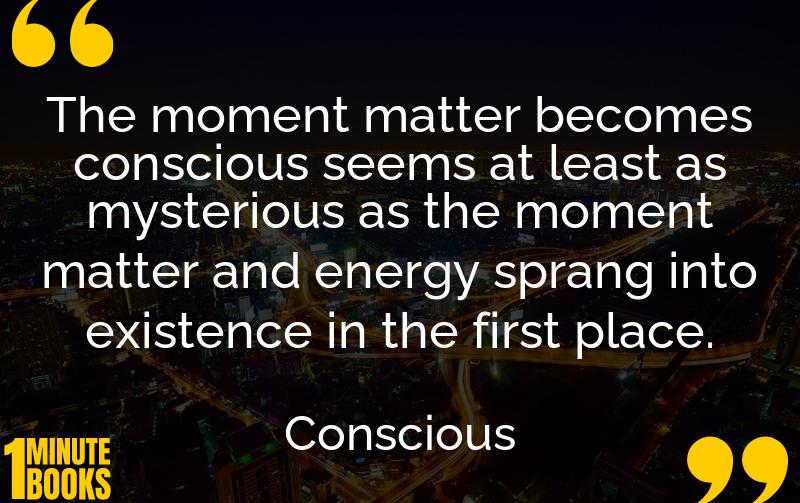
- The nature of consciousness remains as mysterious as the origins of matter and energy.
- AI’s potential consciousness challenges whether behavior alone signifies conscious experience.
- The brain’s perception is a delayed interpretation of sensory data, meaning we live slightly in the past.
- Free will may arise from the brain’s decision-making processes, yet truly free consciousness remains paradoxical.
- Psychedelic drugs can alter self-perception by affecting brain circuits, offering insights into consciousness.
- Meditation offers a traditional tool for exploring consciousness, now being studied scientifically for its effects on the mind.
- First-person experiences are valuable for understanding consciousness but may remain limited by current brain structure.
- Panpsychism explores consciousness as a fundamental feature of all matter, challenging existing scientific paradigms.
- Neuroscientific research may yet reveal deeper insights into the links between consciousness and physical brain structures.