Factfulness challenges the common perceptions of a dreadful world by debunking misconceptions with data and statistics. Hans Rosling highlights ten instincts that skew our view of reality, advocating for a fact-based worldview.
Main Lessons
- The world is better than we perceive, often distorted by fear and negativity.
- Our gap instinct misleads us into believing in vast differences where they barely exist.
- Negativity instinct draws us to dramatic news, skewing our perspective of the world.
- The world and our lives are continually changing; predictability is a fallacy.
- Fear amplifies negative perceptions, while we’re living in the safest period in history.
- Compare and divide data for accurate interpretations; avoid instant conclusions.
- Generalization and stereotypes stem from limited experiences, often misleading.
- Past experiences do not define future outcomes; change is inevitable.
- Avoid single-cause solutions; treat problems with multiple perspectives.
- Blame culture oversimplifies problems; seek complex causes instead of scapegoats.
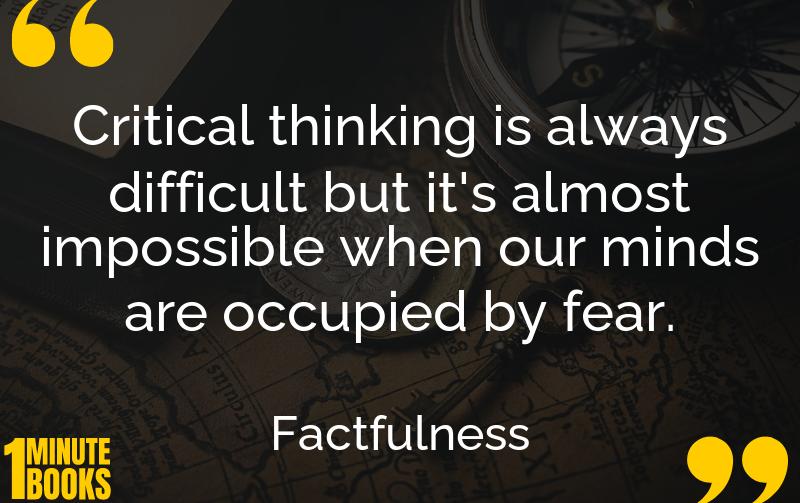
- Urgency can cloud judgments; critical thinking requires breathing space and data analysis.