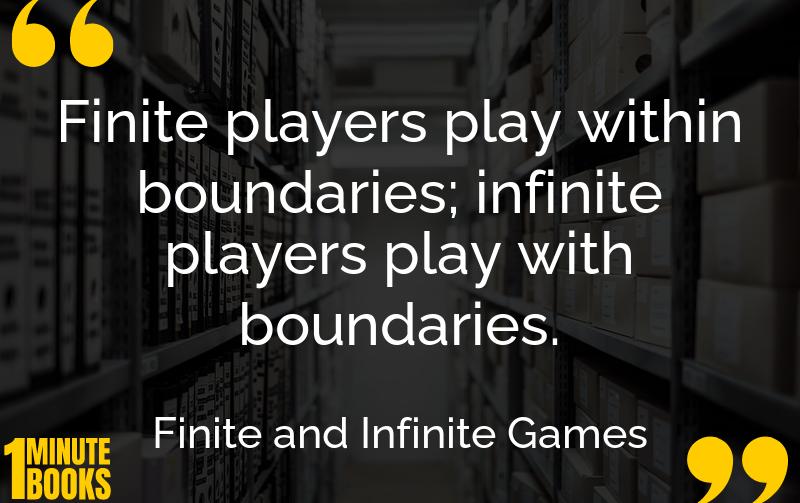
Finite and Infinite Games by James P. Carse explores life as a series of games, distinguishing between finite games with set goals and infinite games played for the joy of playing, encouraging a playful, adaptable approach to life.
Main Lessons
- Finite games are played with clear rules and boundaries; they aim to end with a winner.
- Infinite games focus on ongoing play and evolving interactions, with no ultimate winner.
- Life’s various aspects, such as careers and relationships, can be viewed as infinite games.
- Finite games depend on past information for present power structure, dismissing spontaneity.
- Participants in infinite games embrace change, growth, and uncertainty, enhancing creativity.
- Choosing not to participate in certain societal games, like materialism, can be freeing.
- Finite games are restrictive, often forcing players into roles and rule-based competition.
- Foregoing desired outcomes liberates one to choose which games to engage in authentically.
- Games are omnipresent; recognizing them allows for intentional living and decision-making.
- Speaking and storytelling are infinite games, evolving through participatory communication.
- Whole societies, including politics and economics, are layers of finite games within the infinite game of life.
- An infinite game’s beauty lies in limitless player creativity and shared possibilities.