Oliver Burkeman’s ‘Four Thousand Weeks’ challenges conventional time management, urging acceptance of life’s limitations. He advocates for mindful choices, relinquishing control, and embracing gratitude.
Main Lessons
- Accept life’s finitude and choose your tasks mindfully.
- Time management is more than productivity; it’s about choosing what truly matters.
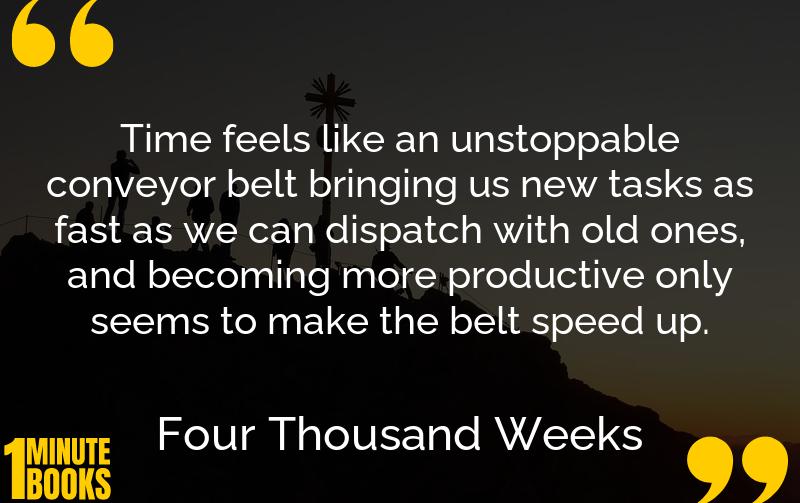
- Productivity can be a trap, creating more tasks rather than freeing time.
- Embrace the discomfort of limited time; it’s part of pursuing valuable tasks.
- Every choice represents a sacrifice of alternative uses of time.
- Gratitude can counteract the stress of time’s limits.
- Procrastination often arises from confronting our finite time and limited control.
- Align your life with your true values, even if it means living with imperfections.
- Acceptance and gratitude can offer peace in a productivity-obsessed world.
- Acknowledge opportunity costs; not everything can be achieved in one lifetime.
- Relinquish the fantasy of total control over your life’s trajectory.
- Reflect on time philosophically and psychologically to find deeper insights.