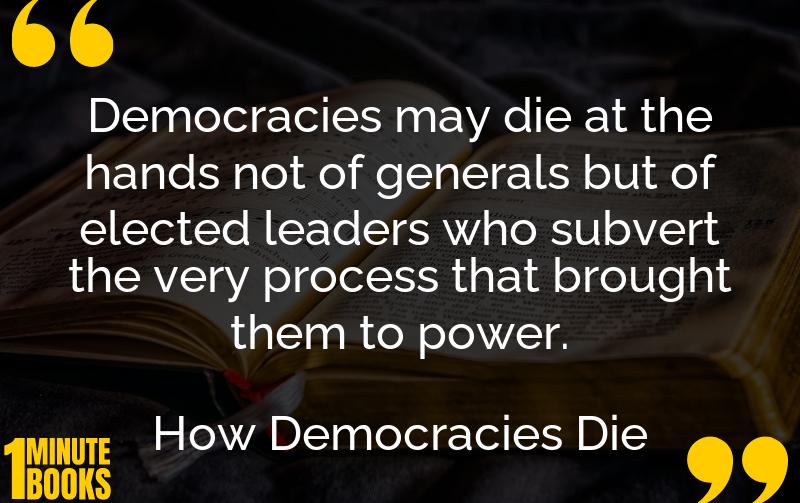
How Democracies Die explores how democracies can decline and fall, examining historical examples and drawing parallels with current global events. It highlights the role of political norms and the dangers posed by populist leaders.
Main Lessons
- Democracies can erode from within, often by those elected to protect them.
- Historical patterns reveal that demagogues rise by exploiting societal fears.
- Political norms are as crucial as constitutional laws in maintaining democracy.
- Populist leaders often undermine democratic institutions by vilifying opponents.
- Subversion of democracy is typically gradual, beginning with small legal changes.
- Modern oratory and media can amplify divisive populist rhetoric.
- The integrity of elections and mutual tolerance are vital democratic norms.
- Autocratic tendencies can surge without overt military coups.
- Internal vigilance is essential to democratic health and longevity.
- The U.S., despite its history, is not immune to democratic decline.
- Global cases highlight that no country is invulnerable to authoritarian shifts.
- Public complacency and polarization can hasten democratic backsliding.
- The importance of education in fostering awareness about democratic processes.
- Effective checks and balances can thwart autocratic power grabs.
- Current global politics echo historical precedents of democratic failures.