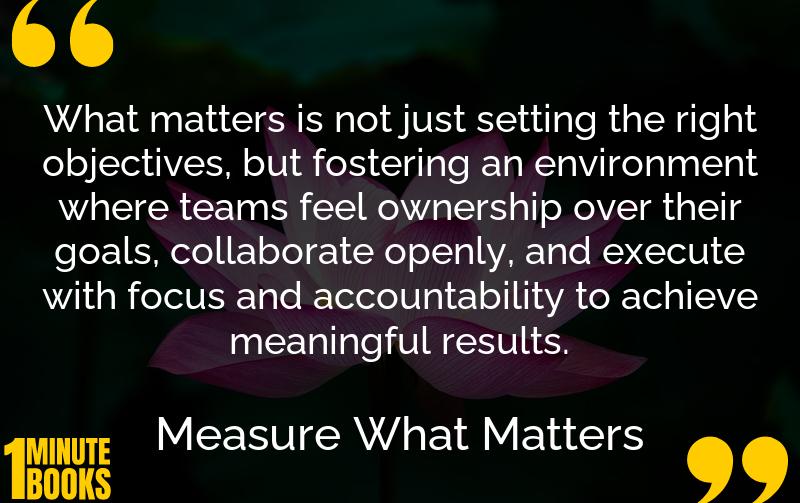
Measure What Matters by John Doerr illustrates how setting Objectives and Key Results (OKRs) can help organizations focus, align efforts, and track progress, transforming management strategies and encouraging growth.
Main Lessons
- OKRs, pioneered at Intel by Andy Grove, align company efforts toward clear goals by linking objectives with measurable key results.
- Effective OKRs are limited in number, transparent, and adjusted periodically to aid focus and maintain direction amidst changes.
- Having OKRs increases collaboration and communication, allowing organizations at all levels to understand and work towards shared visions.
- Like Google, companies can separate OKRs into stretch and committed categories, pushing innovation while keeping daily operations on track.
- Regular tracking of OKRs, much like Google’s monthly check-ins, ensures objectives remain relevant and achievable or pivoted if necessary.
- Stretch goals, though risky, are motivational and can lead to significant breakthroughs, provided there are resources to support potential failures.
- Transitioning from annual performance reviews to continuous feedback systems (CFRs) results in improved employee engagement and organizational culture.
- Transparent OKRs help build accountability, driving intrinsic motivation as individuals see their work contributing to larger organizational success.
- Strategic use of limited OKRs ensures an organization’s most critical objectives are prioritized, preventing dilution of focus and resources.