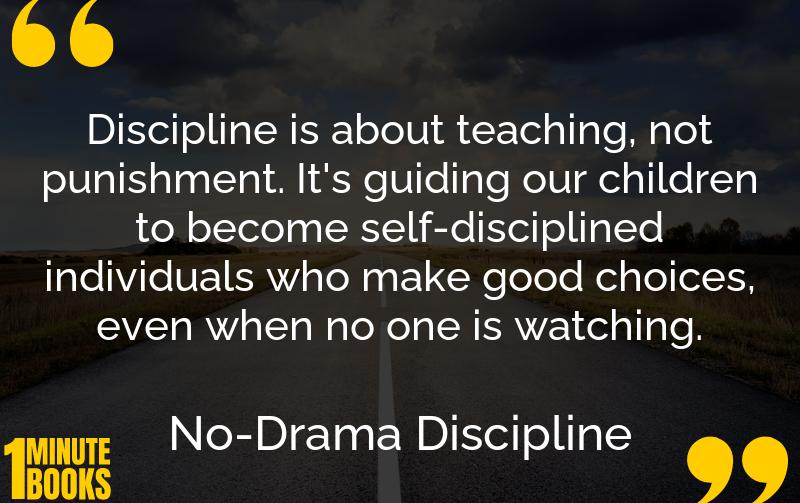
No-Drama Discipline redefines discipline as a teaching tool, not punishment. It advocates for skill-building in children through empathy and reflection, fostering self-discipline and emotional regulation.
Main Lessons
- Understand discipline as teaching, not punishment, to support long-term learning and skill-building.
- Prioritize empathy and soothe children during emotional distress to guide them to a receptive learning state.
- Reflect on the effectiveness of your discipline strategies and adapt if behaviors recur or relationships suffer.
- Align discipline with natural teaching moments, waiting until both parent and child are calm.
- Encourage children to reflect on their emotions and actions, fostering awareness and self-regulation.
- Avoid punitive measures that shift focus from internal reflection to resentment towards the disciplinarian.
- Practice patience and repetition, understanding that learning takes time and experiences to solidify.
- View misbehavior as communication of skill deficits; use it as an opportunity for growth.
- Promote problem-solving by collaborating with the child to find solutions to challenging behaviors.
- Maintain firm limits and high expectations while reinforcing unconditional love and support.
- Approach discipline with curiosity rather than judgment to better understand and address root causes.
- Shift away from traditional punishments that can erode trust and reduced openness in parent-child relationships.