On Intelligence explores the workings of the human brain and lays out a framework for creating machines that mimic real human intelligence, emphasizing that true AI must integrate learning and prediction like the human neocortex does.
Main Lessons
- The brain is more than processing power; it’s about learning and adapting.
- AI lacks the adaptability and pattern recognition of the human brain.
- True intelligence involves understanding and predicting, not just calculating.
- The neocortex plays a critical role in sensory perception and intelligence.
- Brains are pattern machines, using memory to predict future events.
- Machines can evolve to be truly intelligent by mimicking brain functions.
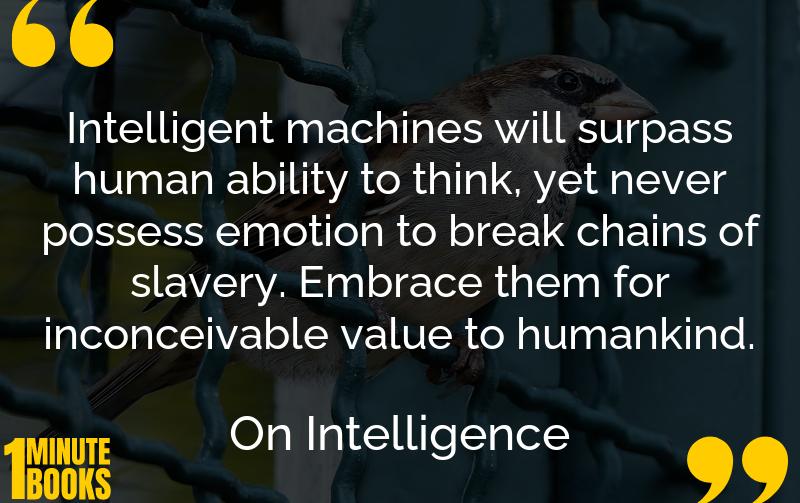
- Emotions and motivations are not products of the neocortex, so AI won’t possess them naturally.
- Technological advances make building intelligent systems feasible soon.
- Intelligent machines should be tools, not threats, enhancing ability to gather and process knowledge.
- Ethical considerations remain crucial as we design these intelligent systems.
- Future machines can integrate new sensory modes like sonar or infrared.
- Understanding the brain enhances both wonder and our ability to innovate.
- Embracing AI can revolutionize problem-solving from weather predictions to healthcare.