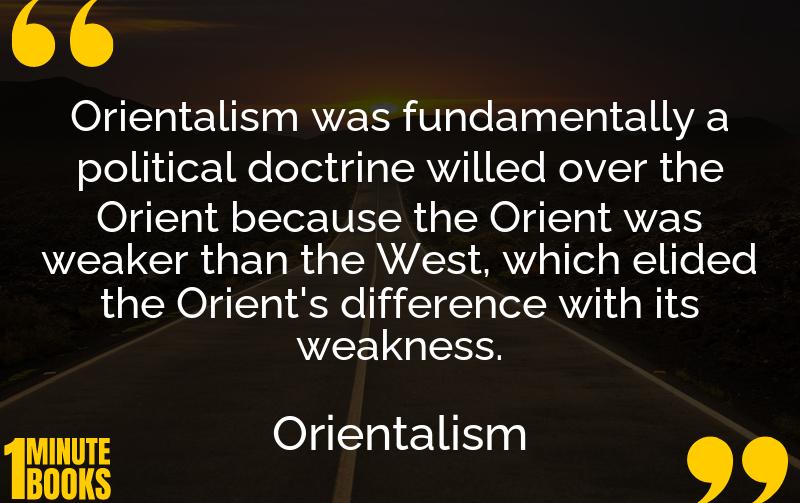
Edward Said’s ‘Orientalism’ critiques the Western portrayal of the East as inferior. He examines how colonialism shaped this viewpoint, linking academic thought to imperial power and challenging stereotypes.
Main Lessons
- Colonialism is portrayed not just as political rule but as a pervasive worldview.
- The West’s superiority complex influenced academic and cultural narratives.
- Said highlights the ongoing persistence of colonialist thinking after formal colonial rule ended.
- Orientalism links scholarly practices to imperial dominance.
- The book challenges degrading stereotypes imposed on Eastern cultures.
- Said argues that the West used academic justification for domination.
- Orientalism has influenced post-colonial studies significantly.
- Said urges Western academics to confront and recognize their biases.
- He shows the interdisciplinary connections between politics, literature, and art.
- Orientalism underscores the role of power in shaping knowledge.
- Said’s ideas remain relevant for understanding global power dynamics today.
- The book calls for a reevaluation of Western perspectives on cultural ‘Others’.
- Said critiques the notion of the West as a civilizing force.
- Orientalism helped transform the study of colonial impact in academia.
- The work inspires critical reflections on cultural and historical narratives.