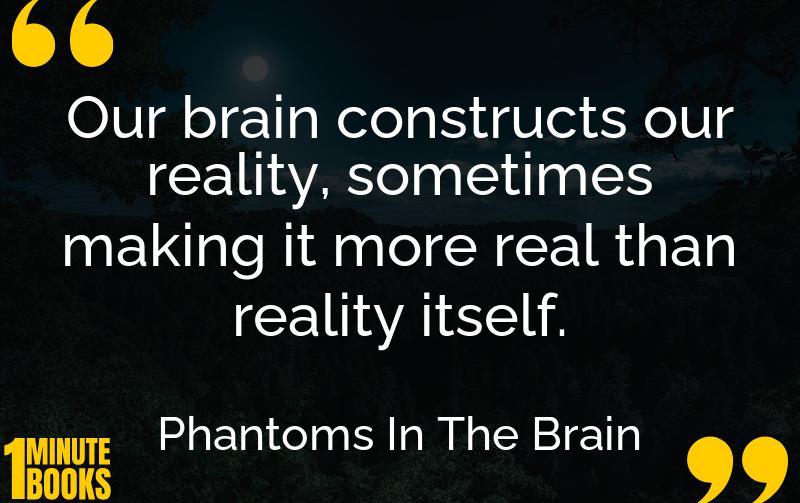
Phantoms in the Brain explores how the brain constructs reality, examining various neurological disorders to probe the mysteries of consciousness and self-awareness.
Main Lessons
- The brain constructs personal reality based on interpretations, which can differ from actual reality.
- Phantom limb syndrome reveals how the brain can make us feel the presence of a missing limb.
- Mirror therapy helps trick the brain into sensing movement in phantom limbs, aiding in adaptation.
- Capgras delusion demonstrates how recognition and emotional response systems can misfire.
- Blindsight shows separation between perception and conscious visual awareness.
- Anosognosia exemplifies how individuals can be unaware of their own disabilities.
- Apotemnophilia highlights complex relationships between body image and brain wiring.
- Even without obvious damage, the mind seeks confirmatory information, shaping experiences.
- Our sense of self is deeply intertwined with neurological functions and disorders.
- Exploring the mind through disorders offers insights into consciousness and identity.
- The book presents case studies to illustrate how neurological phenomena affect reality construction.
- Understanding the brain’s processes can highlight differences between brain and mind.
- Discussion extends beyond disorders to explore how everyone operates under similar brain mechanisms.
- Reflecting on these insights might change how we perceive our thoughts and self-awareness.