The book explores the complexities of narcissism, offering insights into its historical, cultural, and psychological dimensions while providing practical guidance for managing relationships with narcissists.
Main Lessons
- Narcissism has been debated since ancient times, with different perspectives on self-love.
- Sigmund Freud considered narcissism essential in infancy for personal development.
- The narcissism spectrum helps differentiate between healthy and unhealthy narcissism.
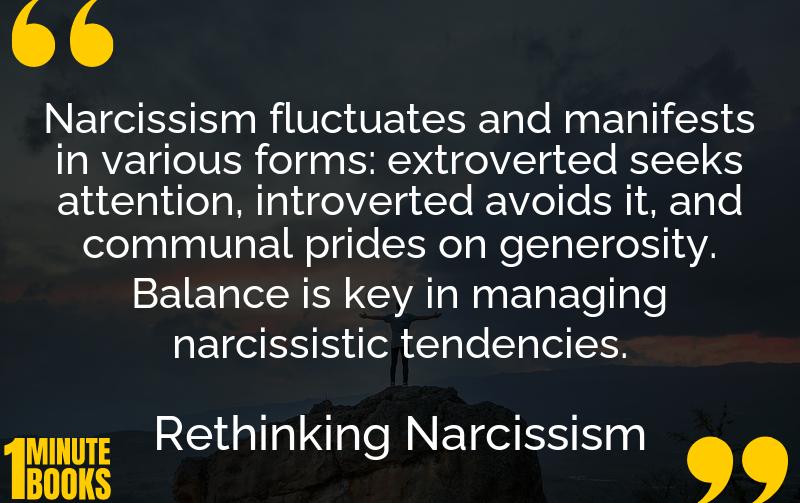
- A balance on the narcissism spectrum is key for managing narcissistic tendencies.
- Narcissism has three forms: extroverted, introverted, and communal.
- Parenting styles significantly influence narcissistic tendencies in children.
- Narcissism combines genetics and upbringing in shaping self-worth.
- Narcissistic traits can be identified through self-confidence issues, sensitivity to criticism, and emotional projection.
- Being aware of warning signs helps recognize narcissistic behavior in relationships.
- Vulnerability can balance a partner’s narcissism, triggering empathy and compassion.
- Healthy self-love aids in building meaningful relationships and self-confidence.
- Unhealthy narcissism can be curbed by expressing needs for love and care.
- Moderation and understanding can assist in transforming narcissistic behavior in relationships.