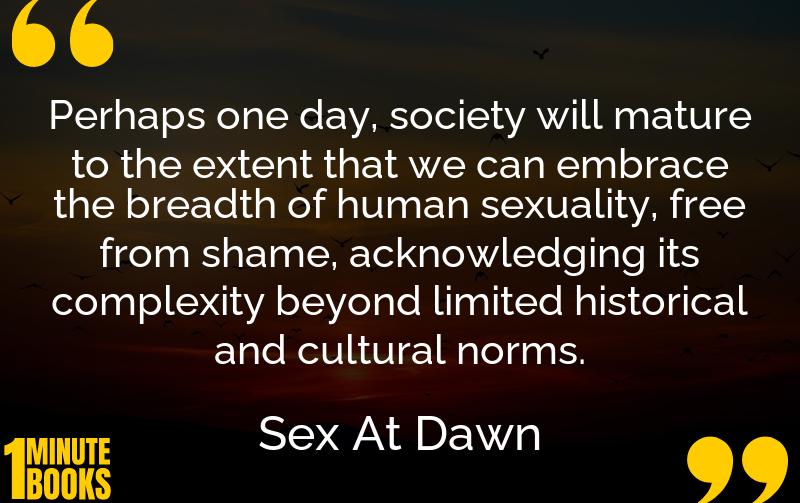
Sex at Dawn explores the evolutionary origins of human sexuality, arguing that pre-agricultural societies were far more promiscuous than modern ones. It suggests that monogamy might not be innate to humans and explores the societal impacts of these changes.
Main Lessons
- Human ancestors lived in communal societies where sharing, including sexual partners, was vital for survival.
- Promiscuity in ancient tribes helped erase paternity, leading to shared responsibilities among men for child-rearing.
- The rise of agriculture led to property ownership, sparking possessiveness and jealousy in sexual and familial relationships.
- Women’s sexual desires are equally strong and complex as men’s, although often socially suppressed.
- Monogamy, often considered unnatural, can lead to dissatisfaction, impacting mental and physical health.
- Oxytocin, released during sexual activity, plays a crucial role in promoting social bonds and happiness.
- Monogamous ideals, conflicting with our evolutionary tendencies, can lead to unhealthy relationships.
- Open discussions about sexual desires, monogamy, and infidelity can bridge gaps between societal norms and human nature.
- Educating youth on sexuality and promoting healthy adolescent exploration can reduce violence and increase well-being.
- True love encompasses emotional understanding beyond biological impulses or the need for sexual exclusivity.