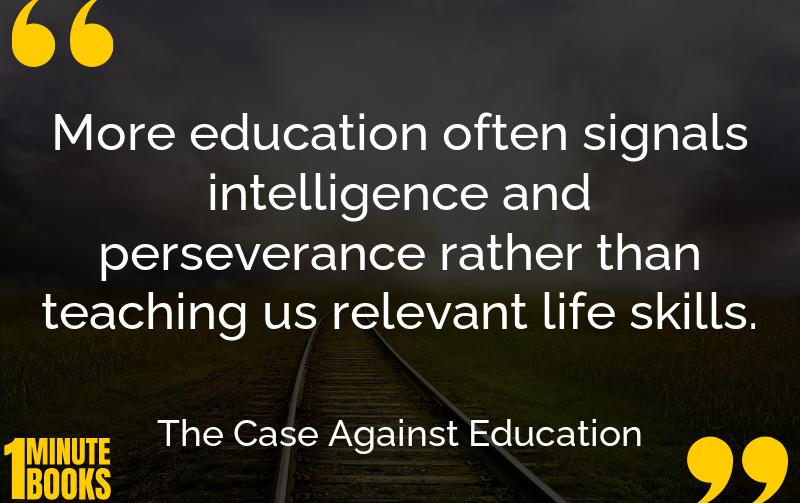
This book argues that the true value of education is overstated, serving more as a signaling tool than imparting useful skills. It suggests that much of the time and money spent on education could be better utilized.
Main Lessons
- Education is commonly seen as beneficial, but its advantages may be exaggerated.
- Students often learn subjects that don’t apply to real-life situations.
- The critical thinking skills taught in classrooms are rarely applied in real-world scenarios.
- Signaling theory explains why college graduates earn more by showcasing attributes like intelligence.
- The Human Capital Theory’s assumption that education imparts direct skills is flawed.
- College may not be a wise investment for all; only some truly benefit financially.
- Educational inflation means that more qualifications are needed for roles once requiring less.
- Vocational training could provide students with practical skills tailored for the job market.
- Rethinking and reforming educational funding could reduce waste and increase efficiency.
- Encouraging early work experience may better prepare individuals for life than traditional education.
- The societal benefits of education are not as substantial as often claimed.
- Focusing strictly on economically valuable education could remedy systemic inefficiencies.
- Reevaluating the value we place on traditional education is essential for systemic change.