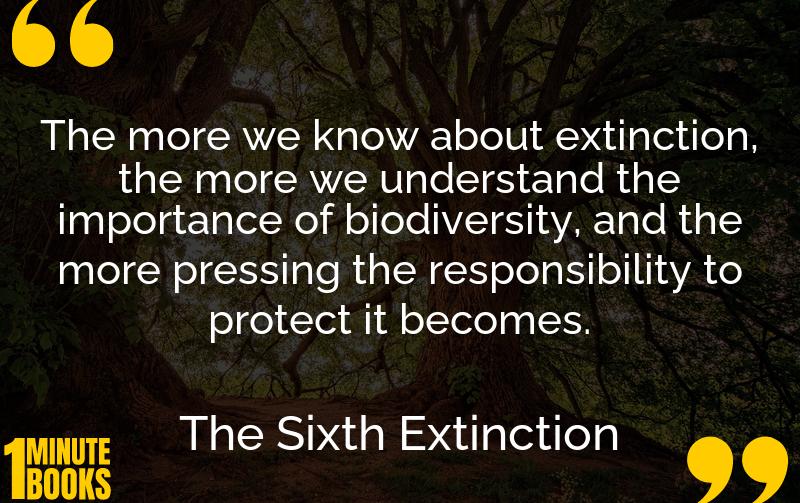
Elizabeth Kolbert’s ‘The Sixth Extinction’ examines the human-driven mass extinction event unfolding today. Through historical context, scientific evidence, and personal stories, it underscores urgent environmental challenges.
Main Lessons
- Human activities, not natural events, are driving today’s extinction wave.
- Past extinctions were caused by natural disasters, but now humans are altering ecosystems.
- Industrialization, deforestation, and pollution are key contributors.
- Coral reefs, bats, and amphibians face serious extinction risks.
- Ocean acidification is significantly impacting marine life.
- The introduction of invasive species disrupts existing ecosystems.
- Human ethical responsibility is highlighted in biodiversity loss.
- The interconnectedness of all life forms shapes Earth’s ecosystems.
- Our choices have long-term environmental consequences.
- Scientists actively work to combat extinction, yet need more support.
- Raising awareness is crucial in preventing further biodiversity loss.
- Recognizing the urgency can galvanize necessary action.
- Understanding extinction history provides insights for current challenges.
- Biodiversity underpins ecosystem stability and human welfare.
- The book calls for responsible future stewardship of Earth’s resources.