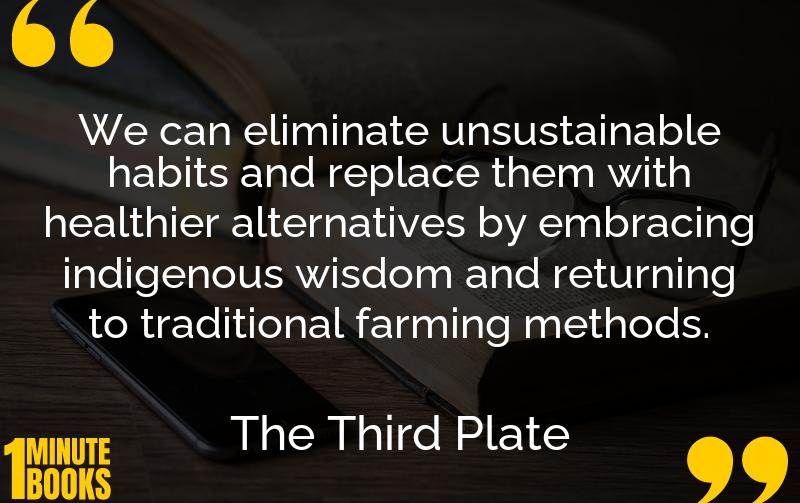
Dan Barber’s ‘The Third Plate’ explores sustainable food practices and criticizes conventional dining and farming. He advocates for a revolutionary approach to agriculture, inspired by indigenous wisdom, to enhance taste and ecology.
Main Lessons
- Our current food culture often overlooks the environmental impact of fine dining and fast food.
- Exotic dishes can be more environmentally damaging than perceived due to resource demands.
- Farm-to-table philosophies can unintentionally support ecologically demanding ingredients.
- Monocultures, the practice of growing a single crop, significantly deplete soil nutrients.
- Healthy soil benefits from varied crops, inspired by Native American teachings like the ‘Three Sisters.’
- Sustainable agriculture requires rotating crops to replenish the earth and improve yield quality.
- Substituting standard dishes with sustainable alternatives can lead to tastier and healthier food.
- Barber’s ‘rotation risotto’ showcases the benefits of using diversely grown grains instead of rice.
- Using every part of an animal, termed ‘blood to bone,’ reduces wastage and enhances sustainability.
- The ‘third plate’ model suggests a cultural transformation toward reciprocal, sustainable food practices.
- By adjusting our cooking methods and ingredients, we contribute to a more sustainable future.
- Indigenous and traditional farming wisdom provides valuable insights into sustainable agriculture practices.
- Even simple menu changes can have a profound impact on environmental health and ecological balance.