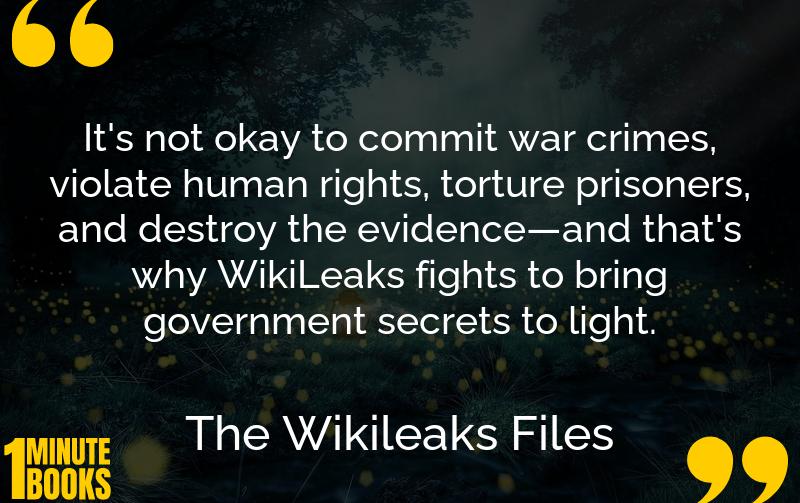
The WikiLeaks Files provides insights into the secrets of global governments, focusing on exposing unethical practices and power abuse. Julian Assange, through WikiLeaks, reveals incidents like war crimes, aiming to hold entities accountable.
Main Lessons
- Julian Assange founded WikiLeaks to challenge institutional corruption.
- WikiLeaks acts as a whistleblower, exposing unethical actions by governments and corporations.
- U.S. government faced significant revelations, including war crimes and human rights violations.
- The publication of classified documents led to global political shocks.
- Assange highlights the dangerous power of propaganda in manipulating public opinion.
- WikiLeaks underscores the importance of transparency in government operations.
- Understanding history objectively is crucial; governments might withhold truth for political gains.
- The book emphasizes the fine line between national security and rights violations.
- Assange’s revelations include the CIA’s approval of inhumane torture practices.
- The exposure of the NSA’s secret actions showcased severe governmental overreach.
- Being informed is empowering; WikiLeaks aims to increase public awareness.
- WikiLeaks illustrates the often clandestine and questionable inter-governmental dealings.
- Holding authorities accountable combats abuses of power and promotes justice.
- WikiLeaks faced opposition but persisted in releasing over two billion U.S. documents.
- The work of whistleblowers is vital in safeguarding democracy and justice.