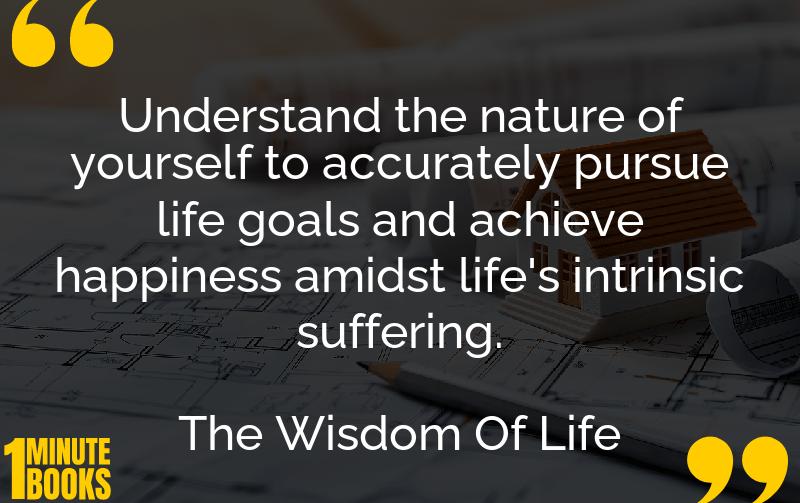
The Wisdom of Life offers Schopenhauer’s secular take on achieving happiness amidst life’s inherent suffering, focusing on self-reflection, self-knowledge, and understanding human nature.
Main Lessons
- Self-knowledge is crucial for personal integrity and achieving life goals.
- Jealousy is a natural emotion that can hinder happiness; it should be managed through self-awareness and avoiding harmful comparisons.
- Solitude can be beneficial, offering space for self-reflection and personal growth.
- The true essence of happiness lies in understanding life’s limitations and finding contentment within them.
- Fate and external circumstances are unpredictable; inner resilience is key to navigating life’s challenges.
- We should cultivate empathy by considering the struggles of others, offering perspective on our problems.
- Maintaining composure in the face of others’ jealousy or ill will preserves personal peace.
- A shift from external validation to internal satisfaction leads to a more stable form of happiness.
- Dealing with life’s downsides with a balanced mindset leads to greater fulfillment.
- Periodic self-examination fosters better insight into personal triggers and behaviors.
- Understanding the subject-object relationship clarifies how we engage with the world.
- Learning to appreciate solitude and its insights encourages self-acceptance and independence.
- Pessimism, as reflected in Schopenhauer’s philosophy, uncovers a path to realistic contentment.