Mark Epstein’s ‘Thoughts Without A Thinker’ draws parallels between Buddhist philosophy and psychoanalysis to explore self-understanding and psychological suffering.
Main Lessons
- Combines Buddhist philosophy with psychoanalysis to explore self and suffering.
- Buddhism’s ‘three poisons’ correlate with Freud’s Eros and Thanatos.
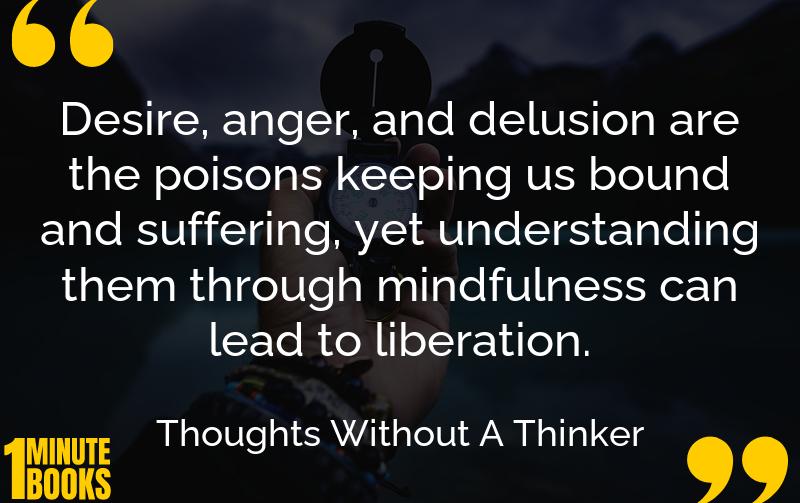
- Desire, anger, and delusion prevent us from discovering true self.
- Buddhism and psychoanalysis emphasize confronting delusion for enlightenment.
- Authenticity vs. societal norms poses psychological challenges.
- Meditation and compassion are tools for transcending self-attachment.
- Hungry ghosts symbolize Western society’s insatiable desires.
- Bare attention helps to accept emotions nonjudgmentally.
- Mindfulness focuses on present to combat suffering.
- Buddhist practices offer a path to mental balance.
- Understanding the nature of ‘no self’ reduces ego-driven desires.
- Examines cultural impacts on self-perception and emotional wellness.
- Encourages holistic perspectives using Eastern and Western techniques.