Abraham Maslow explores the concept of self-actualization, which is the fulfillment of one’s potential. His book discusses the hierarchy of needs that must be met to reach the ultimate state of being.
Main Lessons
- Self-actualization is the ultimate goal of human fulfillment.
- To achieve self-actualization, one must first meet basic physiological needs.
- Self-actualized individuals experience a state of being filled with autonomy and peak experiences.
- Creativity in self-actualized people is akin to childlike curiosity.
- Genuine self-actualization involves health consciousness.
- Self-actualization requires understanding one’s true nature and following it.
- Maslow’s hierarchy of needs implies fulfilling basic needs before higher-level purposes.
- In a state of being, people appreciate things as an end rather than a means.
- Achieving self-actualization shifts focus from need fulfillment to life appreciation.
- Maslow identifies psychological growth as a crucial step toward fulfillment.
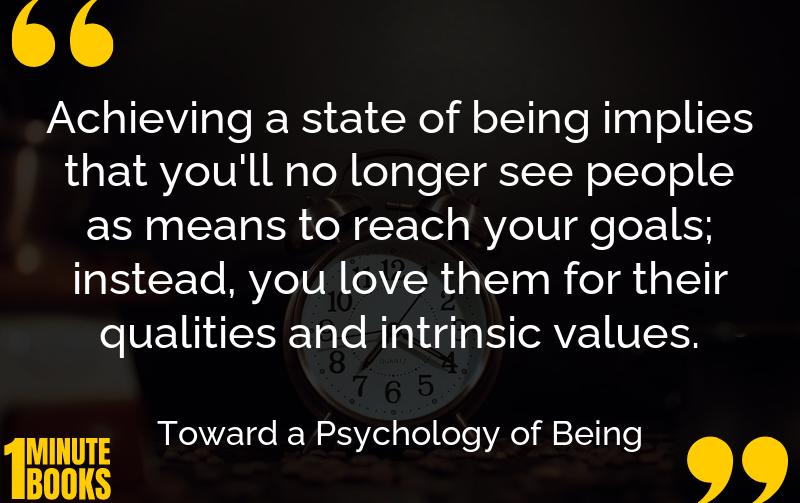
- Self-actualized people love others for their intrinsic values, not as means to an end.
- Creativity in this state involves breaking traditional structures.
- A state of being allows more connection with the world.
- The book emphasizes understanding one’s mind and needs for growth.
- Reaching self-actualization is challenging but leads to a richer life perspective.