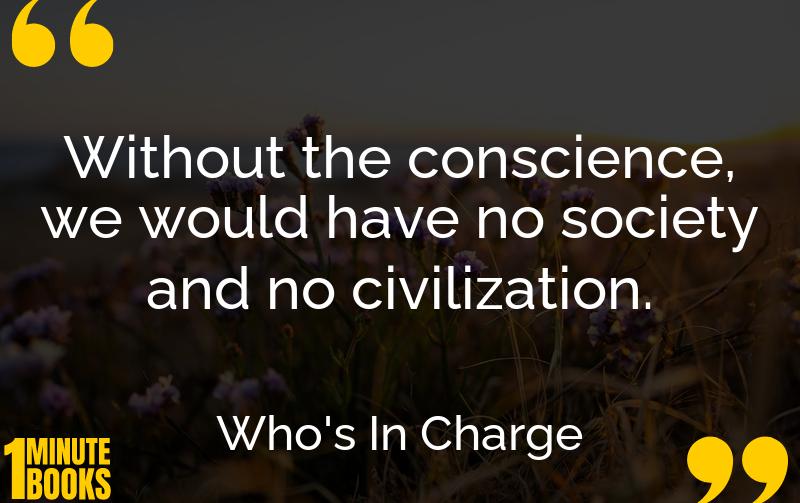
Explores the role of conscience and free will in human behavior, using neuroscience to shed light on the structures that influence our decision-making.
Main Lessons
- The brain operates like a corporation, where different parts have specific roles.
- The left brain acts as an interpreter, often offering explanations that may not be accurate.
- Stories are critical for understanding the world and shaping our moral compass.
- Despite the illusion of free will, our decisions are heavily influenced by personal narratives and upbringing.
- The self and conscience don’t have identifiable physical locations in the brain, yet are fundamental to our behavior.
- Our brains create stories to provide a sense of predictability and comfort in life.
- Human minds are predisposed to seek meaning and structure in chaos through narrative.
- Free will is more complex and constrained by our personal histories than we think.
- Introducing new perspectives allows us to change our behavior and moral beliefs.
- Even though stories can manipulate perceptions, they are also valuable for learning and growth.
- Our actions are filtered by societal, familial, and psychological influences we’ve internalized.
- Understanding brain functions can enhance how we comprehend human consciousness and self-perception.
- Tales like ‘The Tortoise and the Hare’ play a role in moral and personal development.
- Our conscience helps us develop morally, embracing new ethics over time.