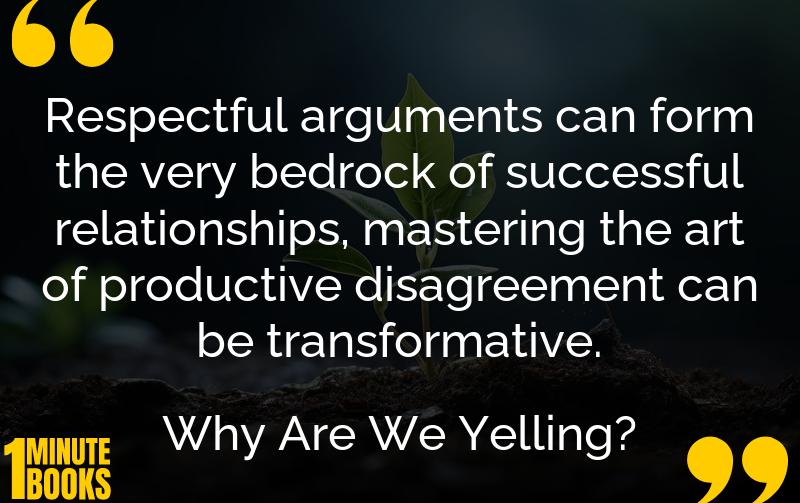
Buster Benson’s ‘Why Are We Yelling?’ delves into turning arguments into enriching experiences. It advocates for embracing disagreements as tools for personal growth, understanding, and broadening perspectives.
Main Lessons
- Arguments aren’t inherently negative; it’s unproductive disagreements that derail us.
- Successful arguments can enhance relationships and professional growth.
- Recognizing the anxieties of head, heart, and hands can improve conflict resolution.
- Cognitive dissonance often fuels anxiety in discussions.
- The voice of possibility opens discussions, unlike power, reason, or avoidance.
- Biases can guide decisions but also block broader perspectives.
- Assuming others’ viewpoints can oversimplify; inviting discussion helps understanding.
- Questions are pivotal in navigating disagreements; open-ended ones deepen dialogues.
- Choosing a formidable debating partner enriches personal growth and understanding.
- Neutral environments foster superior and productive disagreements.
- Exposure to challenging ideas should incorporate logic, empathy, and practical reflection.
- Ignoring unpleasant ideas doesn’t eradicate them; engagement fosters understanding.
- Effective disagreement is vital for society, especially on critical issues.