This book explores why humans justify foolish beliefs and actions, introducing concepts like cognitive dissonance and self-justification, impacting memories and relationships.
Main Lessons
- Cognitive dissonance is the discomfort from holding conflicting beliefs, leading to self-justification.
- Confirmation bias makes us seek evidence that supports our bad actions and ignore contrary evidence.
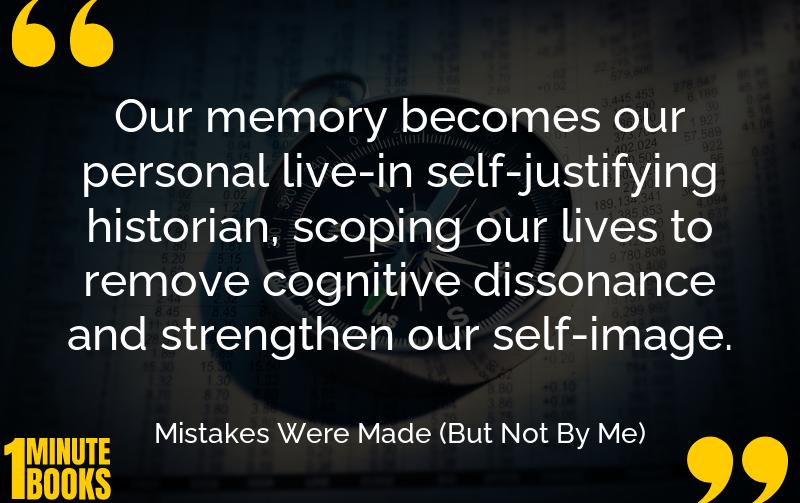
- Memory serves as a self-justifying historian, tweaking events to align with our narratives.
- Blind spots in human perception can obscure crucial details, affecting judgments and decisions.
- Self-justification can dismantle personal or professional relationships by shifting blame.
- Acknowledging mistakes is seen as a strength, fostering learning and respect from others.
- Being aware of blind spots is vital in fields like medicine and law to prevent severe outcomes.
- Conflict resolution improves by addressing the issue, not the people or entities involved.
- Our brains convince us that opposing views are due to others’ ignorance of the full picture.
- Admitting errors invites constructive criticism, promoting growth and understanding.