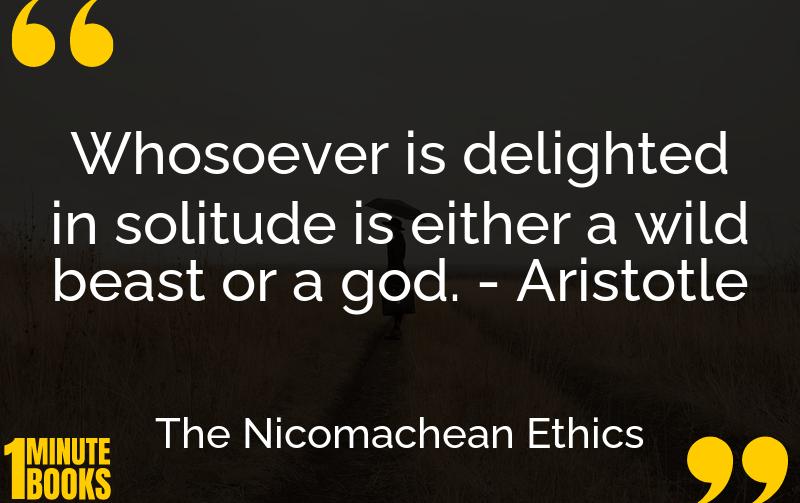
The Nicomachean Ethics explores Aristotle’s philosophy on achieving eudaimonia, emphasizing self-fulfillment, virtue, and lifelong personal growth over conventional happiness.
Main Lessons
- Achieving eudaimonia involves self-actualization rather than ordinary happiness.
- Virtue is a key component to living a fulfilling life; it is a lifelong pursuit.
- Eudaimonia represents reaching one’s full potential which is spiritual and mental fulfillment.
- Physical needs must be fulfilled first for the mind to explore higher virtues.
- Aristotle argues virtue can be both moral and intellectual, like courage or wisdom.
- Balance is crucial in all aspects of life, including virtues and personal habits.
- True happiness results from how we live, not from material success or status.
- A magnanimous person lives greatly, engaging in honorable deeds to benefit others.
- Finding one’s purpose and living for it is essential to achieving true happiness.
- Striving for excellence and virtue is an ongoing habit, not a one-time event.